Ingredient comparison
SynoGut Psyllium vs Flaxseed: 6 Checks on the Two Fibers
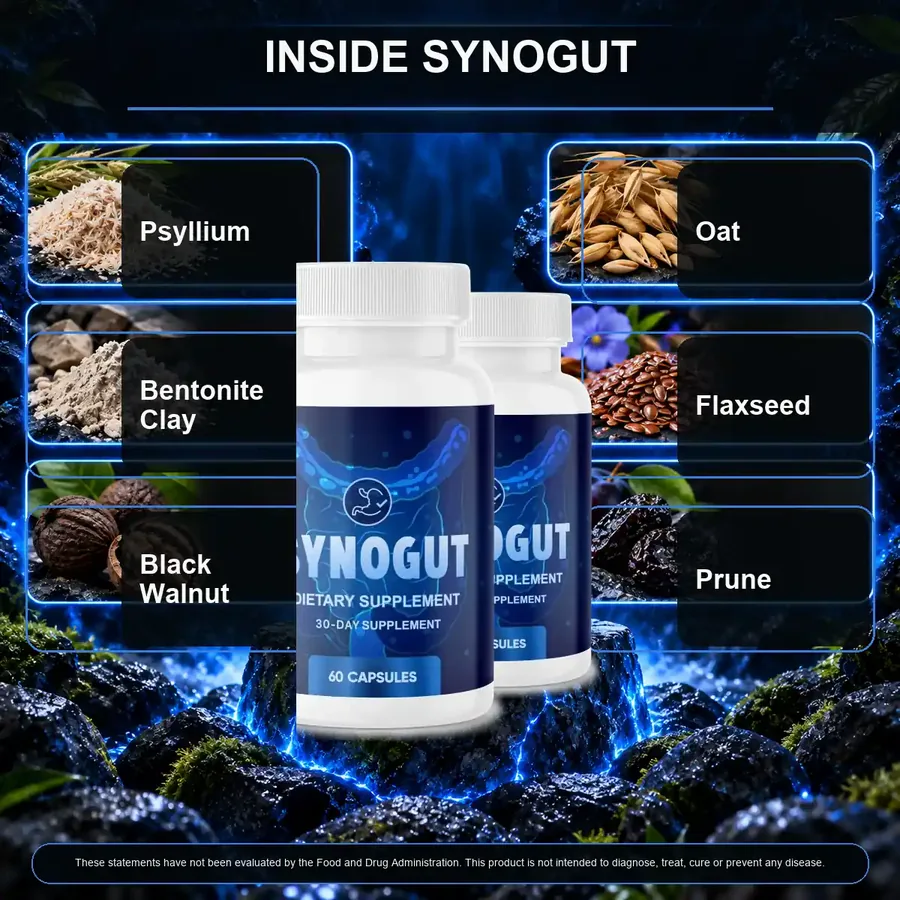
Psyllium husk and flaxseed are not the same thing. They come from different plants, and SynoGut names both without any amount. Both take up water, and both come with advice about medicines. Six checks below compare them side by side, so you can see what is known and what is not published.
Key facts
- Psyllium husk and flaxseed are different plants with different botanical names.
- SynoGut names both and prints no amount, no plant part and no form for either one.
- Plain psyllium is taken with a full 8 oz glass of liquid and kept about 3 hours from some medicines.
- NCCIH says larger amounts of flaxseed may cause bloating or loose stools.
- No head-to-head trial of the two fibers is behind this page, so it ranks neither.
Is psyllium husk the same as flaxseed?
No. The two are often grouped as fibers, and people who search for one often meet the other. But they are separate plants, and the difference shows up as soon as you look at the botanical names.
Psyllium is the husk around the seed of a plantain plant, Plantago ovata. Flaxseed is the whole seed of a plant called Linum usitatissimum. One is a husk. The other is a seed. They share a habit in water, which is why they get lumped together, and not much else.
SynoGut lists both. Psyllium comes first on the sales page and flaxseed comes fifth. The order is not said to mean anything, and no weight sits beside either name.
What are the 6 checks that compare them?
Use the same six questions on each fiber. They keep the comparison fair, and they stop a good-sounding fact about one from leaking into the other.
Check 1: Which plant is it?
Psyllium is Plantago ovata, a plantain plant. Flaxseed is Linum usitatissimum. Two plants, two names.
Check 2: Which part is used?
Psyllium is the husk. Flaxseed is the seed, either whole or ground. For SynoGut the part and the form are not published for either one.
Check 3: What happens in water?
Both swell and form a gel. The gel from flaxseed is called mucilage. Neither works well without liquid.
Check 4: What does an agency say?
MedlinePlus lists plain psyllium as a bulk-forming laxative. NCCIH says larger amounts of flaxseed may cause bloating or loose stools.
Check 5: What is the medicine advice?
MedlinePlus advises a gap of about 3 hours between psyllium and some medicines. For flaxseed, NCCIH says to ask your doctor if you take any medicine at all.
Check 6: What does SynoGut print?
Names only. No amount, no part, no form, and no serving size to divide by.
Notice that the sixth check never improves. It is the same for both fibers, and it is the reason no reader can say which one does more inside a SynoGut capsule.
How do psyllium and flaxseed look side by side?
The table puts the facts in one place. Every row comes from the sources named at the bottom of this page, and every SynoGut cell says what is not published.
| Question | Psyllium | Flaxseed |
|---|---|---|
| Botanical name | Plantago ovata | Linum usitatissimum |
| What it is | Husk around a seed | A small seed, whole or ground |
| In water | Swells into a soft gel | Forms a slippery gel called mucilage |
| Agency note | Sold on its own as a bulk-forming laxative (MedlinePlus) | Bigger amounts can bring bloating or loose stools (NCCIH, 2025) |
| Liquid advice | A full 8 oz glass of liquid with each dose | Not published in the sources used here |
| Medicine advice | Keep about 3 hours from some medicines | Check with your doctor first if you take medicine |
| Amount in SynoGut | Not published | Not published |
| Part or form in SynoGut | Not published | Not published |
Look at the gaps in the table, not only at the filled cells. A reader who sees two tidy columns can forget that the last two rows are empty for both fibers.
Which fiber is better, psyllium or flax?
This page does not pick a winner. The sources behind it describe each fiber on its own. None of them sets the two against each other in a head-to-head trial of the kind a ranking would need, and none tested the SynoGut capsule.
A ranking would also need amounts. If one capsule held a lot of husk and a pinch of seed, or the other way round, the better fiber on paper might play a small part in the bottle. Because no amount is published, nobody can say which one dominates.
So the practical question is not which fiber wins. It is whether you can handle what both ask of you: plenty of water, a gap from your pills, and a gentle start. Those three habits matter the same amount for either name on the list.
What changes when both fibers are in one capsule?
The rules stack. You do not follow the psyllium rule for part of the day and the flaxseed rule for the rest. You follow the stricter version for the whole blend, because you cannot tell where one ends and the other begins.
- Water: take the capsules with a full glass of liquid and keep drinking across the day (MedlinePlus).
- Medicines: leave a few hours between the capsules and your pills, and ask a pharmacist what gap suits yours.
- Pace: add fiber gently. A sudden jump is the usual reason people feel worse, not better.
- Notes: write down the time you took the capsules and the time you took each medicine, so the gap is real and not a guess.
Remember that the other four names on the list bring their own checks. Black walnut is a tree nut, the oat may carry gluten, and the clay is not a standardized product. The fibers are only part of the picture.
Who should ask a professional before taking either fiber?
Anyone who takes a daily medicine should ask a pharmacist first, because the timing advice exists for a reason. Fiber can change how much of a medicine the body takes up.
Anyone who has been told they have a narrowing or a blockage in the bowel, or who has trouble swallowing, should talk to a doctor before adding a bulk-forming fiber. The same goes for anyone with a diagnosed bowel condition, who should ask the doctor who treats it.
And anyone with a tree nut allergy should stop at the ingredient list, long before fiber comes into it. Black walnut is named on the same list as the two fibers.
How can you find out which form your bottle holds?
Read the label first. If it prints a panel, the panel may say husk or powder, whole seed or ground. This site was given no panel, so it cannot tell you.
If the label is silent, call the order desk on +1 (302) 200-3480 with your order ID and ask what the label for your lot says. A plain answer is worth writing down, with the date and the name of the person you spoke to.
Do not guess from the list order or from photos on the sales page. A picture of a seed on a sales page shows a seed. It does not show how much is in a capsule.
Frequently asked questions
Are psyllium husk and flaxseed the same?
No. Psyllium is the husk of Plantago ovata. Flaxseed is the seed of Linum usitatissimum. They both form a gel in water, which is why people mix them up.
Does SynoGut have more psyllium or more flaxseed?
Not published. Both are named on the sales page with no amount, so nobody outside the company can say which one is larger.
Do psyllium and flaxseed both affect medicines?
Both come with medicine advice. Psyllium is kept about 3 hours from some medicines, and NCCIH says to ask your doctor about flaxseed if you take any medicine.
Which fiber causes more bloating?
No comparison is published here. NCCIH notes that larger amounts of flaxseed may cause bloating or loose stools, and any fiber added too fast can upset the stomach.
Can I swap SynoGut for plain psyllium or ground flax?
That is a question for your pharmacist or doctor. SynoGut has six names and no published amounts, so it cannot be matched to a single-ingredient product.
Is SynoGut proven to work better than one fiber alone?
No. No study of the finished capsule is published. It is not FDA approved, and nothing here says it treats any condition.
Our view
Psyllium and flaxseed are cousins in habit, not twins in kind. They swell, they gel and they need water. They also ask you to think about your pills. That is the useful part of the comparison, and it is the part that costs nothing to act on.
What this page cannot give you is a verdict on the blend, because the amounts are not published. SynoGut is a dietary supplement. It is not FDA approved, and no supplement is. If you take medicine or have a bowel condition, talk to your doctor before you begin.
Sources for this post
- MedlinePlus. Psyllium. U.S. National Library of Medicine. Source
- National Center for Complementary and Integrative Health. Flaxseed and Flaxseed Oil: Usefulness and Safety. Updated February 2025. Source
- NIH Office of Dietary Supplements. Dietary Supplements: What You Need to Know. Source
Read next

Ready when you are
See the packs and the terms
If you decide to try a bottle, the order page shows pack totals and the written terms first. Read the label when it arrives, then follow it.
Synogutdaily earns a commission when a reader buys through an order link on this site. Your price stays the same.