No mechanism is published for this formula
How Does SynoGut Work? Fiber and Water Explained
SynoGut works mainly through fiber, which takes up water and adds bulk.
Four of its six named ingredients are fibers or foods. The other two are black walnut, a tree nut, and bentonite, a mineral clay.
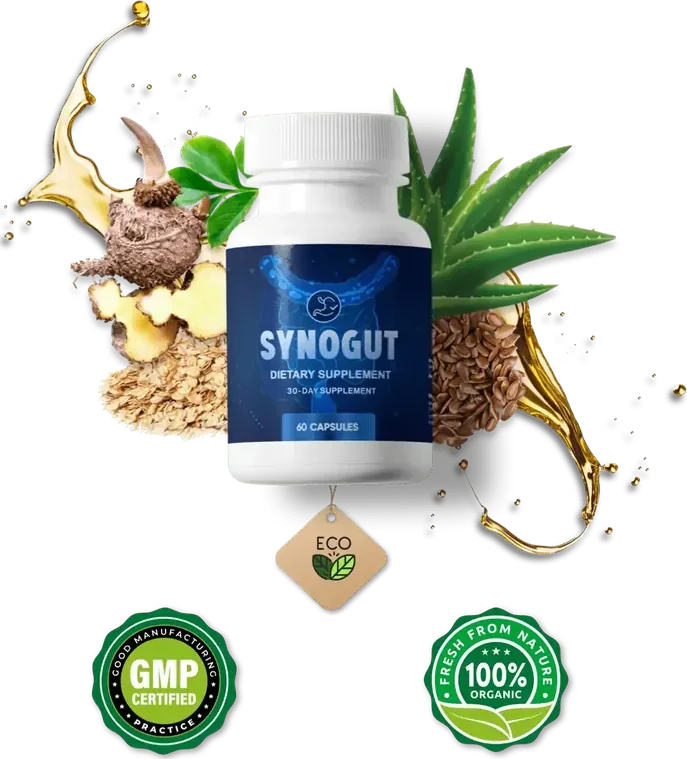
How does SynoGut work?
No mechanism is published for this formula. The sales page names six ingredients and does not explain what the mixture is meant to do inside the body, and no amount is given for any of them, so nobody outside the company can describe how it works.
What can be described honestly is the ingredient list. Four of the six named ingredients are fibers or foods with a long everyday record: psyllium, oat, flaxseed and prune. One is a tree nut. One is a clay. This page explains how fiber behaves in general terms, what clay is said to do, and exactly where the published material runs out.
Fiber and water
Soluble fibers take up water and swell. That is ordinary physics, and it happens in a glass as readily as anywhere else.
No published amounts
A mechanism needs a dose behind it. With no serving size and no weights, no amount can be argued for or against.
No study on this product
No trial of the finished SynoGut formula is published, so nothing here is a statement about what the capsules do.
How does fiber work, in plain words?
Fiber is the part of a plant the body does not break down, so it travels through largely intact. Along the way it does two simple physical things: it takes up water and it adds bulk.
Soluble fibers such as psyllium husk and the mucilage in flaxseed behave like tiny sponges. Drop them in water and they swell into a soft gel. Insoluble fiber does less absorbing and acts more like a scaffold. Both need water to do anything at all, which is why the drug information for plain psyllium tells people to take each dose with a full 8 oz glass of liquid (MedlinePlus). Fiber taken dry is fiber that cannot work as intended, and it can sit uncomfortably.
| Named ingredient | What kind of thing it is | What it does in water | Research note on the ingredient itself |
|---|---|---|---|
| Psyllium | Soluble husk fiber | Takes up water and forms a gel | Sold on its own as a bulk-forming laxative, taken with a full 8 oz glass of liquid |
| Flaxseed | Seed fiber plus mucilage | Forms a slippery gel in water | Larger amounts may cause bloating or loose stools |
| Oat | Mixed grain fiber | Beta-glucan thickens in water | Gluten status depends on how the crop was handled |
| Prune | Whole dried fruit | Carries fiber, sorbitol and water | Studied as a food at about 100 g a day for 3 weeks |
| Black Walnut | A tree nut | Not a fiber ingredient in the usual sense | A major food allergen under US labeling law |
| Bentonite Clay | A mineral clay | Swells and holds water | Clay products are not standardized batch to batch |
Prune is the plainest case. A review of four trials reported that prunes helped stool frequency and consistency, at about 100 g of prunes a day for 3 weeks (Lever et al., 2014). That is a cupful of fruit, weighed out and eaten daily. A capsule with no published amount cannot be set beside that figure, which is the whole reason our ingredients page repeats amount not published on every line.
What is bentonite clay supposed to do?
Bentonite is a mineral clay that swells when it meets water and can hold other substances on its surface. Sellers of clay products describe that binding effect in broad terms, and it is a real property of clay in a laboratory sense.
What is not there is the human research. Clay has little quality evidence behind it for this kind of use, and clay products are not standardized the way a food ingredient is, so one batch is not the same as another. The FDA has warned shoppers about high lead levels found in some bentonite clay products (FDA). That is a general statement about clay products, not a finding about this one, and no test result for this one is published. The amount of clay in a SynoGut capsule is not published either.
Why can nobody describe a mechanism for this formula?
Because the six pieces of information a mechanism would rest on are all missing. The table below lists them and what the published material gives instead.
This is not a complaint about the product. It is simply what the material allows. A mixture of four fibers, a nut and a clay could be arranged in countless ways, and without weights the arrangement is unknown to a reader.
| What a mechanism claim needs | Why it matters | What SynoGut publishes |
|---|---|---|
| A serving size | Tells you the daily amount a claim would rest on | Not published |
| An amount for each ingredient | Lets you compare a capsule with research on that ingredient | Not published for all six |
| The part or form used | Husk and powder, hull and nut, bran and isolated fiber behave differently | Not published |
| A stated target | What the formula is meant to act on, in measurable terms | Not published |
| A study on the finished product | Shows what the mixture itself does in people | None published |
| A published mechanism | The seller's own account of how the blend is meant to work | Not published |
Our Supplement Facts page covers the same gap from the label side. Our benefits page handles the sales wording, which is written in the language of support rather than of measured results.
What does water have to do with it?
Water is the part of any fiber product that people skip and then regret. A fiber that is designed to swell needs liquid to swell in, and too little water makes the experience worse rather than better.
The practical rules are short. Take fiber with a full glass of water rather than a sip. Keep drinking through the day. Increase fiber gradually rather than all at once, which is ordinary common sense whatever the serving on your bottle turns out to be. NCCIH notes that larger amounts of flaxseed may cause bloating or loose stools and advises asking your doctor if you take any medicine (NCCIH, 2025), and plain psyllium is kept about 3 hours away from some medicines for a related reason (MedlinePlus).
- A full glass of water with the capsules, not a mouthful
- Water through the rest of the day as well
- A few hours between fiber and any pills you take, after asking your doctor
- Adults 18 and over only, and not during pregnancy or nursing
Our how to use page works through the daily routine in more detail, including the timing question.
What should you not expect this page to tell you?
It cannot tell you what SynoGut will do for you, and no honest page could. There is no published trial of the finished product, no published amount for any ingredient and no published serving size.
A supplement is not a medicine and is not reviewed by regulators before it goes on sale (FDA). The NIH guide for shoppers makes the same point and adds a second one worth keeping: a product being natural says nothing about whether it suits you (NIH Office of Dietary Supplements).
The health line matters more than any of the rest. Digestive symptoms that last, that are new for you, or that come with blood, weight loss or pain need a doctor and not a capsule, and a doctor is also the right person for symptoms that keep coming back (NIDDK). Nothing on this site replaces that visit or the advice that follows it.
How SynoGut works: common questions
Does SynoGut work?
No trial of the finished product is published, and no amount is published for any of the six named ingredients, so nobody can answer that from the public material.
How long does fiber take to move through the body?
That varies a great deal from person to person and with what else you eat and drink. No timeline is published for this product.
Is bentonite clay a fiber?
No. It is a mineral clay that swells in water. It is not a food and not a fiber, and the amount in a capsule is not published.
Why does fiber need water?
Soluble fiber works by taking up liquid and swelling. Taken with too little water it cannot do that, and it can feel uncomfortable going down.
Can SynoGut replace fruit, vegetables and water?
No. Food and drink are where most fiber and fluid come from, and no supplement is sold as a substitute for either.
Is the formula tested in a laboratory?
No test result is published for this product. The lot and certificate references on our listing are reference labels, not lab proof.
Sources for this page
- MedlinePlus. Psyllium. U.S. National Library of Medicine. Source
- National Center for Complementary and Integrative Health. Flaxseed and Flaxseed Oil: Usefulness and Safety. Updated February 2025. Source
- Lever E, Cole J, Scott SM, Emery PW, Whelan K. Systematic review: the effect of prunes on gastrointestinal function. Aliment Pharmacol Ther, 2014. Source
- U.S. Food and Drug Administration. FDA warns consumers about lead in a bentonite clay product. Source
- National Institute of Diabetes and Digestive and Kidney Diseases. Constipation. Source
- NIH Office of Dietary Supplements. Dietary Supplements: What You Need to Know. Source
- U.S. Food and Drug Administration. Dietary Supplements. Source
Keep reading
Ready when you are
Order SynoGut from the authorized US retailer
Capsules taken with water. Follow the label on your bottle. 60-day money-back guarantee. A real person at +1 (302) 200-3480 for orders, tracking and refunds.