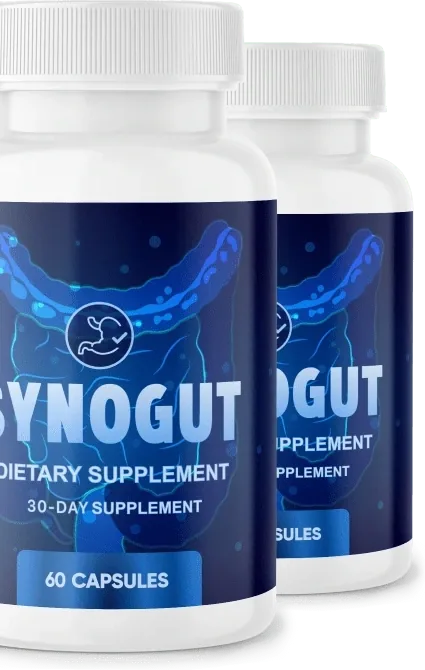
Read from the sales page ingredient panel
SynoGut Ingredients: What Is in Each Capsule
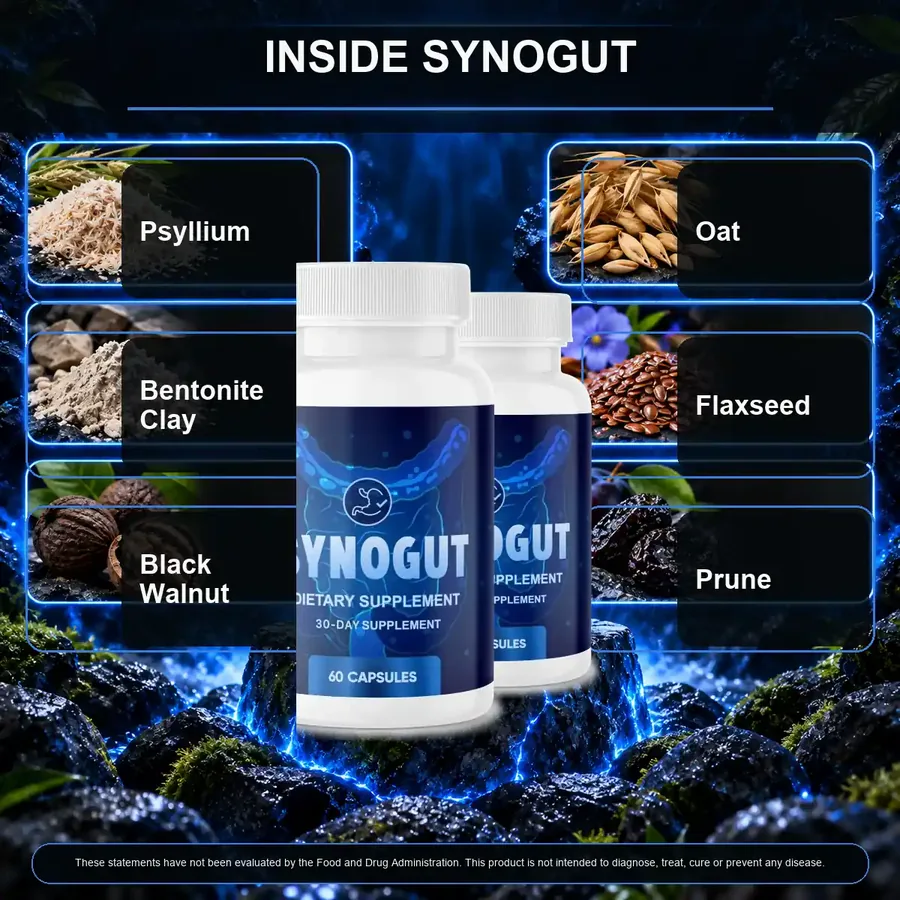
SynoGut is made with six named ingredients: psyllium, bentonite clay, black walnut, oat, flaxseed and prune.
Four are fibers or foods, one is a mineral clay and one is a tree nut. Check your bottle label for the serving size.
Allergy question? See who SynoGut is for.
What is in SynoGut?
The SynoGut sales page names six ingredients, in this order: psyllium, bentonite clay, black walnut, oat, flaxseed and prune. No amount is given for any of them, and no Supplement Facts panel was supplied, so every line on this page reads amount not published.
So this page tells you what each of the six is in everyday words, what researchers have looked at for each one, and where the label is silent. It cannot tell you how many milligrams are in a capsule, because that figure is published nowhere we can check. Our Supplement Facts page lists everything else that is missing.
Six names, in order
Psyllium, bentonite clay, black walnut, oat, flaxseed and prune. The order is not said to mean anything.
No amounts at all
No milligram figures, no blend total, no percentages, no serving size. Amount not published applies to all six.
No parts or forms
Husk or seed, hull or nut, bran or isolated fiber. Those choices change how an ingredient behaves.
The six named SynoGut ingredients, one at a time
Here are the six in the order the sales page gives them. Four are fibers or foods, one is a tree nut, and one is a clay.
1. Psyllium
What it is: The husk around the seed of a plantain plant grown mostly in India. It is the fiber sold on its own in pharmacies. The botanical name is Plantago ovata husk.
Amount not published. Whole or powdered husk are both sold. Which form is used here is not published.
What research says about the ingredient: Psyllium is sold on its own as a bulk-forming laxative. The drug information says to take each dose with a full 8 oz glass of liquid, and to keep it about 3 hours away from some medicines, including digoxin, aspirin-type salicylates and nitrofurantoin (MedlinePlus).
2. Bentonite Clay
What it is: A soft clay dug from the ground. It is a mineral, not a fiber and not a food. The botanical name is a natural clay.
Amount not published. Clays come in different grades. Which grade is used here is not published.
What research says about the ingredient: Clay is the odd one out here. Clay products are not standardized batch to batch, and the FDA has warned shoppers about high lead levels found in some bentonite clay products (FDA). That is about clay products in general, not a finding about this one.
3. Black Walnut
What it is: The nut and green hull of the black walnut tree, a cousin of the walnut sold in supermarkets. The botanical name is Juglans nigra.
Amount not published. Hull and nut are used in different products. Which part is used here is not published.
What research says about the ingredient: The point that matters most here is not about digestion. Tree nuts, walnut included, are one of the major food allergens named in US labeling law (FDA), so a nut allergy changes the answer about this bottle entirely.
4. Oat
What it is: The grain that goes into porridge. Its fiber includes beta-glucan, the part that makes cooked oats thick. The botanical name is Avena sativa.
Amount not published. Bran, flour and isolated fiber are all called oat. Which is used here is not published.
What research says about the ingredient: Oat is a food with a long record, and the open question is gluten. Oats are often grown, harvested and milled near wheat, so a gluten free claim depends on how a crop was handled (FDA). The sales page does not say whether this oat is certified.
5. Flaxseed
What it is: A small brown or golden seed. Ground flax carries fiber plus a gel called mucilage that forms in water. The botanical name is Linum usitatissimum.
Amount not published. Whole seed and ground meal behave differently. Which is used here is not published.
What research says about the ingredient: Flax is well studied as a food. Larger amounts may cause bloating or loose stools, and NCCIH advises asking your doctor first if you take any medicine (NCCIH, 2025).
6. Prune
What it is: A dried plum, and the one item here most people have already eaten. The botanical name is dried plum.
Amount not published. Fruit, juice concentrate and powder are all sold as prune. Which is used here is not published.
What research says about the ingredient: Prune has the friendliest research of the six. A review of four trials reported that prunes helped stool frequency and consistency, at about 100 g of prunes a day for 3 weeks (Lever et al., 2014). That is fruit eaten by the cupful, not a capsule.
How much of each ingredient is in a SynoGut capsule?
Amount not published, for all six. There is no blend total and no serving size either, so no arithmetic gets you to a number.
A standard label carries a Supplement Facts panel with a serving size and a weight beside every ingredient. Nothing like that was supplied here, and the order given is not order of weight.
| Named ingredient | What it is | Amount printed | Part or form printed |
|---|---|---|---|
| 1. Psyllium | Seed husk fiber | Amount not published | Not published |
| 2. Bentonite Clay | A mineral clay | Amount not published | Not published |
| 3. Black Walnut | Tree nut, a named allergen | Amount not published | Not published |
| 4. Oat | Grain fiber | Amount not published | Not published |
| 5. Flaxseed | Seed fiber and mucilage | Amount not published | Not published |
| 6. Prune | Dried fruit | Amount not published | Not published |
If the bottle you receive carries a printed panel, it tells you more than any website can. Read it first, and call the order desk at +1 (302) 200-3480 if it does not match what you expected.
What does research say about these ingredients?
Four of the six are ordinary fibers and foods with a real research record, and prune and psyllium have the clearest one. None of that work tested SynoGut, and none of it can be matched to a capsule with no published amount. Those studies used weighed portions. A capsule blend with no figures on it cannot be lined up against them.
| Ingredient | Depth of human research | What that research used | What SynoGut publishes |
|---|---|---|---|
| Psyllium | Long record as a single fiber | Weighed doses, taken with a full glass of liquid | Amount not published |
| Prune | Review of four trials | About 100 g a day for 3 weeks, eaten as fruit | Amount not published |
| Flaxseed | Studied as a food | Spoon-measured amounts | Amount not published |
| Oat | Long record as a food grain | Eaten as a grain | Amount not published |
| Black Walnut | Studied mainly as a food and an allergen | No amount can be drawn from it | Amount not published |
| Bentonite Clay | Little human research for this use | No amount can be drawn from it | Amount not published |
Which SynoGut ingredients need a second look before you buy?
Three of the six carry a detail that is easy to miss. Black walnut is a tree nut, the oat gluten question is left open, and bentonite clay is a mineral rather than a food.
Black walnut is a tree nut
Tree nuts are a major food allergen in US labeling law. If anyone who might take this bottle has a nut allergy, that is a hard stop. Our who it is for page covers the households this rules out.
The oat may or may not be gluten free
Oats pick up wheat in the field and at the mill unless a crop is kept separate. The sales page does not say whether this oat is certified, so anyone avoiding gluten for a medical reason should ask first.
Bentonite clay is a clay, not a food
Five of the six grow in a field. Bentonite is dug out of the ground, and clay products are not standardized the way a food ingredient is. No test result for this product is published.
What does the SynoGut ingredient list leave out?
Almost everything a careful shopper wants. Six names is the whole of it, and a list of names is not a formula.
- No amount for any of the six, and no blend total
- No serving size, so no way to work an amount out
- No plant parts or forms, so husk and powder read the same
- No other ingredients, fillers or capsule material
- No statement that the six are listed by weight
Four fibers and foods, one clay and one tree nut is a fair summary of the list.
One health point belongs on any page about digestion. Symptoms that last, that are new for you, or that come with blood, weight loss or pain need a doctor, not a supplement. Our how to use page covers water and medicine timing.
SynoGut ingredients: common questions
How much psyllium is in SynoGut?
Amount not published. The sales page prints the name with no weight beside it, and no Supplement Facts panel was supplied for this product.
Are the six ingredients listed in order of weight?
The sales page does not say so. Without that statement and without a blend total, the order tells you nothing about how much of anything is inside.
Does SynoGut contain nuts?
Yes. Black walnut is a tree nut, and tree nuts are a major food allergen in US labeling law. Anyone with a nut allergy should not take it.
Is SynoGut gluten free?
Not published. Oat can carry gluten unless it is grown and processed to keep it out, and the sales page does not say whether this oat is certified.
Why is clay in a digestion supplement?
Bentonite clay is a mineral that swells in water. It is a clay rather than a food, its amount here is not published, and clay products are not standardized.
What are the other ingredients and the capsule material?
Not published. Fillers, flow agents and the capsule shell are all unknown from the material we were given.
Sources for this page
- MedlinePlus. Psyllium. U.S. National Library of Medicine. Source
- National Center for Complementary and Integrative Health. Flaxseed and Flaxseed Oil: Usefulness and Safety. Updated February 2025. Source
- Lever E, Cole J, Scott SM, Emery PW, Whelan K. Systematic review: the effect of prunes on gastrointestinal function. Aliment Pharmacol Ther, 2014. Source
- U.S. Food and Drug Administration. FDA warns consumers about lead in a bentonite clay product. Source
- U.S. Food and Drug Administration. Food Allergies. Source
- U.S. Food and Drug Administration. Gluten and Food Labeling. Source
Keep reading
Ready when you are
Order SynoGut from the authorized US retailer
Capsules taken with water. Follow the label on your bottle. 60-day money-back guarantee. A real person at +1 (302) 200-3480 for orders, tracking and refunds.