Product type
Is SynoGut a Probiotic? 5 Label Checks to Settle the Question
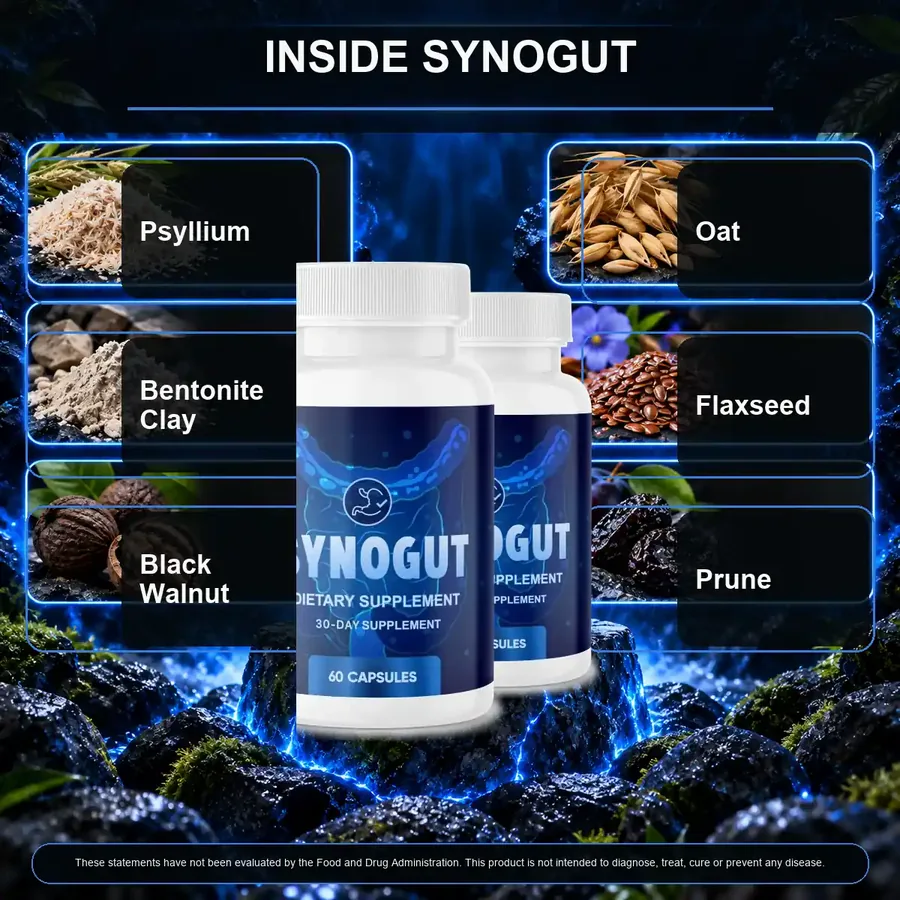
Nothing published calls SynoGut a probiotic. Its six listed names are psyllium, bentonite clay, black walnut, oat, flaxseed and prune. None is a named live culture, and no strain or count is printed. Five label checks let you confirm this on your own bottle before you ask a doctor about gut questions.
Key facts
- SynoGut is a capsule dietary supplement. The sales page names six ingredients and no live culture.
- No strain name and no culture count is published for SynoGut.
- Four of the six names are fibers or foods, one is a clay and one is a tree nut.
- The only form published is capsules. No gummy, drop or powder form is published.
- Lists on other sites may show different names. This site follows the six names on the sales page.
What would a probiotic label need to show?
Think about the last time you picked up a product sold as a probiotic. The label usually carries a name that looks like a lab code, and a number next to it. Those two items tell a shopper which living organism is inside and how much of it the maker claims. Without them, the word probiotic is only a word.
That is a useful yardstick for SynoGut. If the product were sold as a probiotic, you would expect to find a strain name and a count somewhere on the sales page or the bottle. This site has searched the published material for both. It found neither.
What it did find is a short list of plain names. They are easy to look up, and they point somewhere else entirely. The next section turns that into five checks you can run in a few minutes.
What are the 5 label checks?
Run these in order with your own bottle in your hand. Each one is a yes or no question, and none needs special knowledge.
Check 1: Read the six names
The sales page names psyllium, bentonite clay, black walnut, oat, flaxseed and prune, in that order. Count them against your bottle. Six names, one clay, one tree nut.
Check 2: Hunt for a strain name
A live culture would be named with a genus and a species, often followed by a code. None appears in the published list. If your bottle prints one, write it down and call the order desk on +1 (302) 200-3480, because that would differ from the sales page.
Check 3: Hunt for a count
A probiotic claim needs a number of organisms. SynoGut publishes no count and, in fact, no amount of any kind for any of its six names.
Check 4: Read the category words
The front label says Dietary Supplement and Capsules. It does not say probiotic. Category words are the cheapest thing for a seller to print, so their absence is meaningful.
Check 5: Compare, then trust the bottle
Some web lists show other ingredient names for SynoGut. If a list disagrees with your bottle, your bottle wins. Send a photo of the label to [email protected] and ask for the page to be fixed.
If all five checks come out the way this page says, SynoGut is a fiber-and-food capsule blend with a clay and a nut in it. It is not sold here as a live-culture product.
Why do people search for SynoGut and probiotic together?
Three things push the two words together. The brand name has gut in it. The sales page speaks about the health of the digestive system. And the wider market for gut products is crowded with live-culture capsules, so shoppers tend to sort anything new into that box.
The sales wording is general. It says things like "Support the health of your digestive system with 100% natural ingredients". That line is the seller speaking. It does not name a culture, and it does not say how the support is meant to happen.
| What a searcher assumes | What the published material shows |
|---|---|
| The word gut means live cultures | The name is a brand name. The six named ingredients include no live culture. |
| Support wording means probiotic | Support wording is general sales language. No mechanism is published. |
| Natural means probiotic | Natural describes where an ingredient came from. A clay and a tree nut are natural too. |
| A seal proves the type | None of the ten listing seals names a culture, a strain or a count. |
| Every capsule for digestion is the same type | Fibers, clays and cultures are different kinds of product and need different checks. |
How do the checks differ for a fiber capsule?
Once you know what kind of product you hold, you know which questions to ask. For a product built from fibers, foods, a clay and a nut, four questions matter more than any culture question.
- Water. Fiber takes up liquid, and the drug information for plain psyllium says to take each dose with a full 8 oz glass of liquid (MedlinePlus).
- Medicine timing. Psyllium is kept about 3 hours away from some medicines, and flaxseed carries the advice to ask your doctor if you take any medicine (NCCIH, 2025).
- Allergy. Black walnut is a tree nut, and tree nuts are a major food allergen under US labeling law (FDA).
- Gluten. Oats are often handled with wheat, so a gluten free claim depends on how they were grown and processed (FDA).
Notice that none of those four is about live cultures. They are the real checks for the real list. A shopper who spends the whole time asking whether SynoGut is a probiotic can miss the nut allergy sitting in plain view.
Does the form matter: capsules, pills, gummies or drops?
Searches sometimes use the words pills, gummies or drops. The published form for SynoGut is capsules. That is the only form on the front label and in the sales page, and this site found no gummy, drop or powder version.
Pills and capsules are often used as loose synonyms by shoppers, and that is fine for a search. For a label check, use the exact word printed on your bottle. If a seller offers something under the SynoGut name in a different form, treat that as a different product until the order desk confirms otherwise.
| Item | What is published |
|---|---|
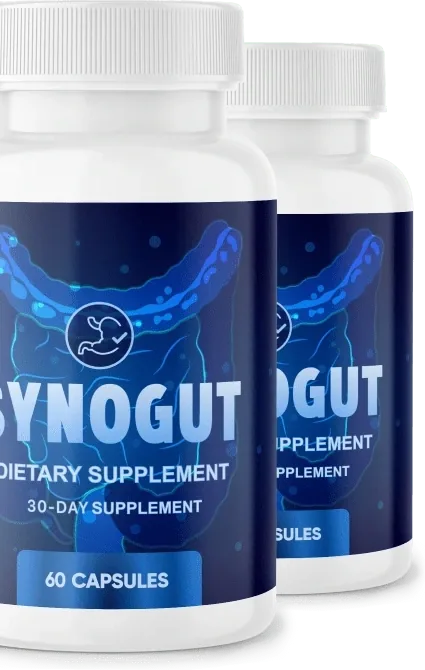
| Form | Capsules, in a bottle that reads 60 capsules |
| Front label wording | Dietary Supplement, 30-day supplement |
| Pack sizes | 1 bottle (60 capsules), 3 bottles (180 capsules), 6 bottles (360 capsules) |
| Price | Not published here. The checkout shows it |
| Guarantee | 60 days from purchase, unless the sales page prints longer |
| Other forms | None published |
What do the seals say about cultures?
The listing carries ten seals. They cover a registered factory, good manufacturing practice, a made in the USA claim, a doctor formulated claim, natural ingredients, non-GMO, vegetarian, dairy free, naturally gluten free and a money-back guarantee. Not one of them mentions a culture, a strain or a count.
That does not make the seals false. It means they speak about other things. A seal that describes a factory cannot tell you what type of product is inside the bottle. If you want to read what each seal can and cannot prove, the FDA approval post on this site goes through all ten.



What if you want a probiotic instead?
Then shop for one by its label, not by a brand name that happens to contain the word gut. Look for the strain name and the count on the product you pick up. Ask a pharmacist how it sits with your medicines, because a pharmacist can read a full list in minutes.
If your goal is steady digestion and you have symptoms that last, see a doctor first. Ongoing digestive trouble has many causes, and a supplement of any type is not a way to find out which one is yours (NIDDK).
If you are happy with a fiber-style capsule, SynoGut is one option among many. Read the six names, check the nut and the oat, and plan your water. The checkout shows pack sizes and written terms before payment.
Frequently asked questions
Is SynoGut a probiotic?
Nothing published calls it one. The sales page names six ingredients, psyllium, bentonite clay, black walnut, oat, flaxseed and prune, and none is a named live culture.
Does SynoGut contain live bacteria?
No live culture is named in the published list and no count is printed. If your bottle shows one, call +1 (302) 200-3480, because that would differ from the sales page.
Why do some lists show other SynoGut ingredients?
We cannot say where those lists came from. This site follows the six names on the sales page and the bottle images it was given. Your own label is the final word.
Does SynoGut come as gummies, drops or powder?
Not that this site has found. The published form is capsules, 60 to a bottle. Treat any other form sold under the name as a different product until the order desk confirms it.
Can I take SynoGut with a probiotic I already use?
No pairing data is published. Ask a pharmacist, and mention that psyllium and flaxseed are kept a few hours away from some medicines.
Is SynoGut meant to treat a gut condition?
No. It is a dietary supplement. It is not FDA approved, and it does not diagnose, treat, cure or prevent any disease. See a doctor for symptoms that last.
Our view
The honest answer is short. SynoGut is not described as a probiotic anywhere we can see, and its six named ingredients point to fibers, foods, a clay and a nut. If you came here to sort the product into a box, that is the box.
What deserves more of your time is the part nobody advertises: the missing amounts, the tree nut and the open question about gluten. SynoGut is a dietary supplement. It is not FDA approved, and no supplement is. Medical questions belong with your doctor.
Sources for this post
- MedlinePlus. Psyllium. U.S. National Library of Medicine. Source
- National Center for Complementary and Integrative Health. Flaxseed and Flaxseed Oil: Usefulness and Safety. Updated February 2025. Source
- U.S. Food and Drug Administration. Food Allergies. Source
- U.S. Food and Drug Administration. Gluten and Food Labeling. Source
- National Institute of Diabetes and Digestive and Kidney Diseases. Constipation. Source
- NIH Office of Dietary Supplements. Dietary Supplements: What You Need to Know. Source
Read next
Ready when you are
Check the label, then decide
Order links open the checkout, where the pack total, shipping and the written terms show before you pay. A 60-day window exists for a change of heart.
Synogutdaily earns a commission when a reader buys through an order link on this site. Your price stays the same.